
Technology
Precisionyou can feel.
Tap the copper points to explore the equipment in our treatment rooms, and what each piece means for you.
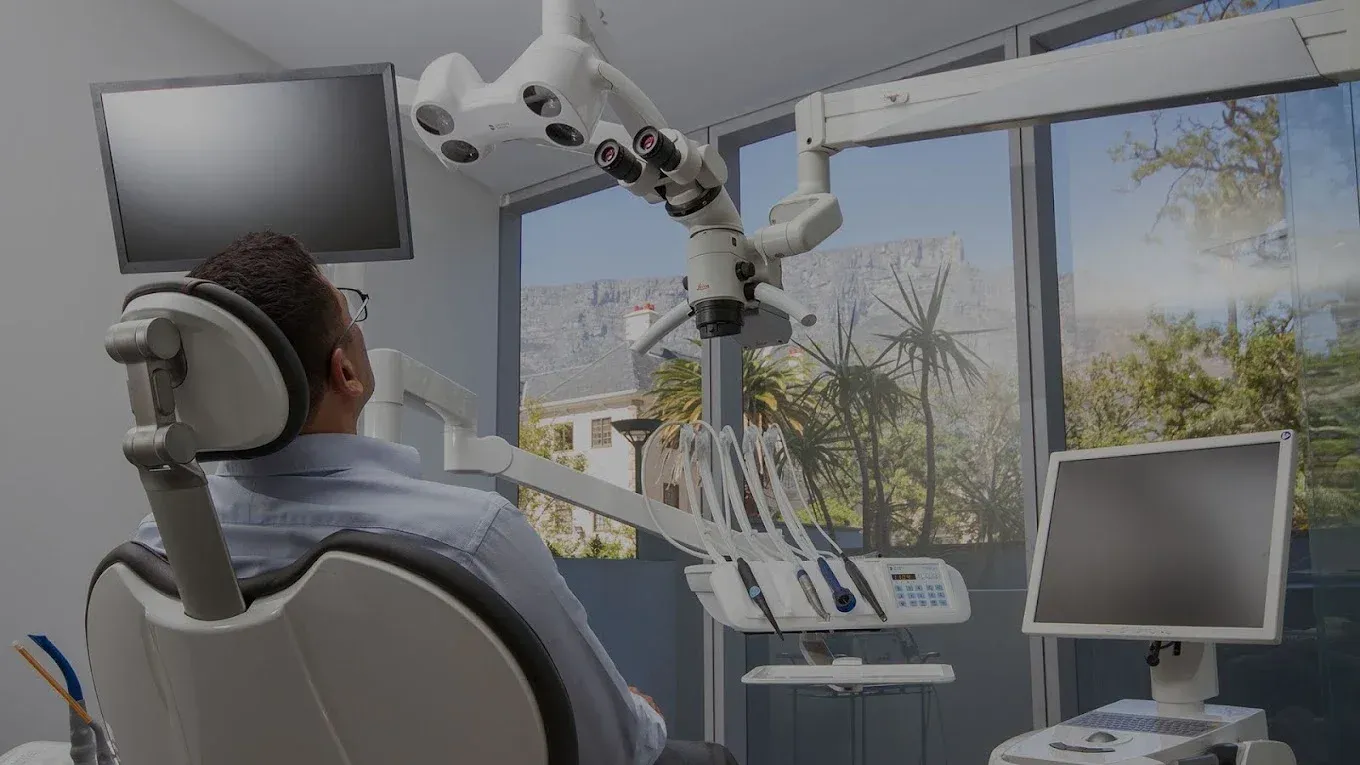
Photo: Leica microscope above the chair
01 · Magnification
Leica dental microscope
The structures of a tooth are tiny, and early signs of disease or damage are often hidden. Magnification helps us pick up small details so problems can be treated early, before they cause damage or pain.
The Leica dental microscope gives a clear, magnified view, supporting accurate diagnosis and careful, conservative treatment.
02 · Laser dentistry
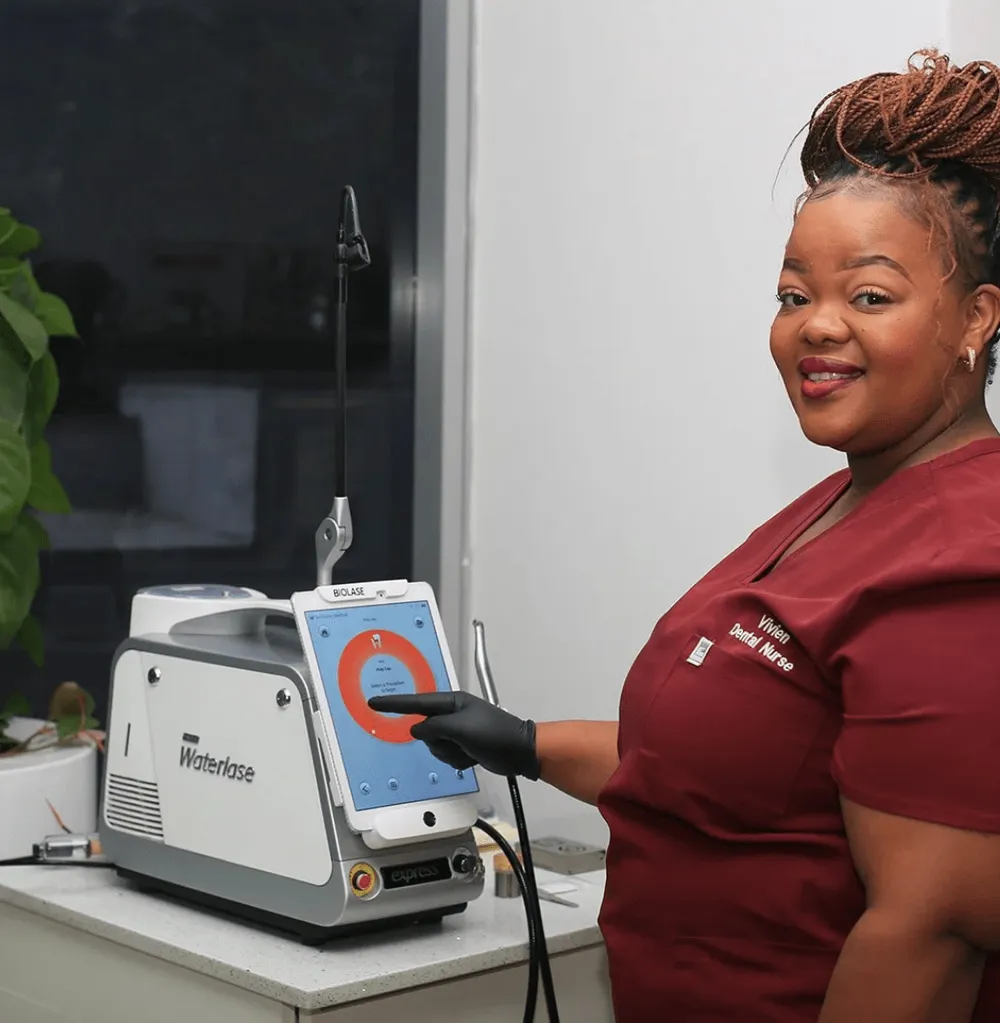
Waterlase
Waterlase combines focused light energy with a fine stream of water for precise treatment of gums, other soft tissues and cavities.
For many procedures, patients experience less discomfort and need less anaesthetic, and treatment can often be completed in fewer visits.
Photo: diode laser handpiece
03 · Laser dentistry
Diode laser
A diode laser delivers energy as concentrated light at a wavelength absorbed by a specific target, such as gum tissue.
There is no drill vibration, and for many soft-tissue procedures local anaesthetic or stitches may not be needed. Healing is often quicker. It can be used for children and adults.
Photo: Star Pen anaesthetic system
04 · Comfort
Computer-controlled anaesthetic (Star Pen)
We understand that injections can make people anxious. The Star Pen is an electronic system that delivers local anaesthetic slowly and steadily.
Much of the sting of an injection comes from the solution being delivered too quickly, so a controlled flow means many patients feel less discomfort.
Photo: CEREC milling unit
05 · Same-day restorations
CEREC
CEREC uses CAD/CAM technology to design and mill ceramic restorations in the practice, so many crowns and restorations can be completed in a single visit.
- Often one visit
- Digital scans instead of impressions
- No temporary crown in many cases
- Metal-free ceramic
Photo: handheld digital X-ray unit
06 · Imaging
Digital X-ray (Rextar)
The Rextar is a compact, lightweight handheld X-ray unit for digital imaging.
It is easy to position accurately, which helps us capture clear images first time and avoid repeat exposure.
Photo: intraoral camera image on screen
07 · See what we see
Intraoral camera
A small handheld camera shows sharp images of your mouth on a screen in real time.
It helps us diagnose and plan, and it helps you understand exactly what is happening with your teeth and gums.
Photo: 3D dental scan on screen
08 · Imaging
3D imaging
3D imaging shows what flat X-rays can miss: overlapping teeth, nerve canal paths, hidden roots and jaw joint concerns.
Our unit's positioning system makes scans more comfortable and supports treatment planned around your specific concern.
Advanced instruments, with the same attentive, personal care at every appointment.
Book a consultation